Problem Drinking vs. Alcoholism: How to Tell the Difference
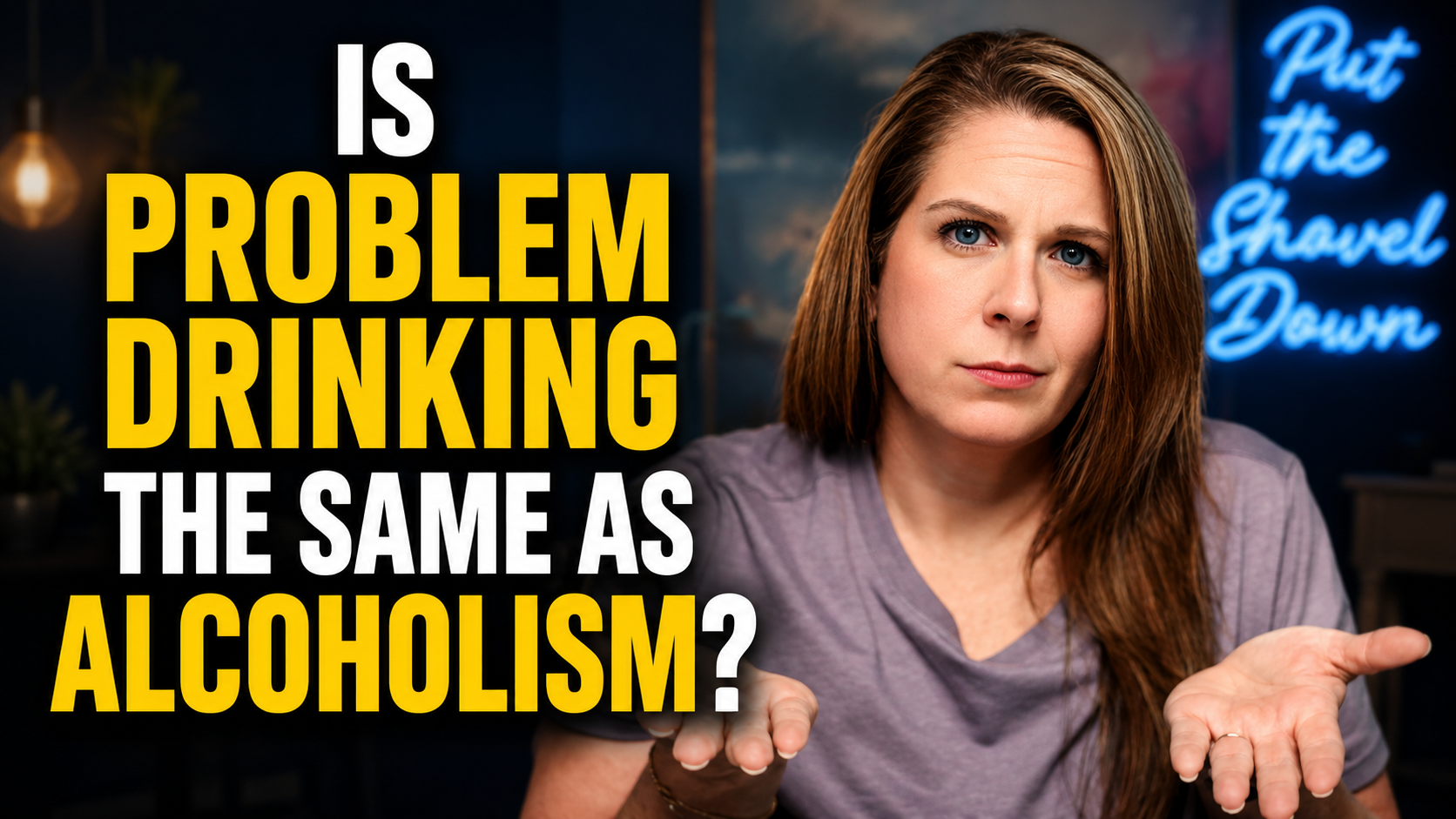
Problem Drinking vs. Alcoholism: How to Tell the Difference
“I know I drink too much sometimes, but I’m not an alcoholic.”
Maybe you’ve said that after hearing someone describe losing their job, getting a DUI, or drinking first thing in the morning.
You still work. You take care of your family. You pay your bills. You’ve even gone weeks or months without drinking.
You may be right that your situation looks very different. But when you’re trying to understand problem drinking vs. alcoholism, comparing yourself to someone with more severe consequences can leave you asking the wrong question.
Instead of “Am I as bad as that person?” try this:
“What happens when I decide to change my drinking?”
That answer can tell you much more about the pattern you’re dealing with.
What Is the Difference Between Problem Drinking and Alcohol Use Disorder?
“Problem drinking” is a broad, everyday term for drinking that creates problems or increases risk. It isn’t a separate diagnosis that automatically rules out addiction.
Alcohol use disorder, or AUD, is a medical condition involving difficulty stopping or controlling alcohol use despite harmful consequences. It can be mild, moderate, or severe. “Alcoholism” is a familiar term, but AUD is the clinical language used today.
In other words, there isn’t always a clean line between “I drink too much” and “I have an alcohol problem.”
The amount you drink matters. So do the consequences. But another important piece is whether your drinking keeps moving beyond the limits you intended.
Why “I’m Not That Bad” Can Be Misleading
It’s easy to find someone whose drinking looks worse than yours.
You haven’t lost your job. You haven’t wrecked your car. You don’t drink in the morning.
Those differences matter. But they don’t tell the whole story.
Imagine noticing a leak in your ceiling and deciding it doesn’t need attention because someone else’s roof has collapsed. Your situation may be less severe, but the leak still deserves a closer look.
The same applies to drinking. You don’t have to experience the worst possible consequences before your concerns count.
And you don’t have to decide whether the word “alcoholic” fits before you can ask for help.
When Your Drinking Rules Keep Changing
Sometimes, the most revealing part of a drinking problem is the gap between what you planned and what actually happened.
You decide:
“I’ll only drink on Friday and Saturday.”
Then Thursday gets added because the week was stressful.
You set a two-drink limit.
Then it becomes four because you’re celebrating, your friends stayed longer, or tomorrow is your day off.
You take a month off and feel relieved. Clearly, you can stop.
But a few weeks later, you’re back in the same pattern that worried you in the first place.
None of these examples diagnoses alcohol use disorder on its own. But repeatedly drinking more than intended or struggling to cut back are recognized symptoms worth discussing with a health professional.
The question becomes: Are your decisions shaping your drinking, or are you repeatedly revising your decisions to make room for it?
Signs Your Drinking Deserves a Closer Look
You may notice yourself spending more energy managing alcohol than you expected.
Perhaps you negotiate with yourself about when you can drink. You recover from one disappointing weekend, make a new plan, and end up having the same conversation with yourself the next Sunday.
Some recognized warning signs include:
-
Drinking more or longer than you intended.
-
Wanting to cut back but repeatedly struggling to do so.
-
Experiencing strong urges to drink.
-
Spending substantial time drinking or recovering.
-
Continuing despite problems with relationships, health, or responsibilities.
-
Giving up activities that matter to you because of alcohol.
A clinical assessment considers 11 symptoms over the past 12 months. Two or three indicate mild AUD, four or five indicate moderate AUD, and six or more indicate severe AUD. A qualified clinician can help you understand whether those criteria apply to you.
A checklist can help you organize your concerns. It doesn’t replace an assessment.
Can You Have an Alcohol Problem and Still Be Successful?
Yes. Keeping a job, parenting, and paying your bills do not rule out alcohol use disorder.
Your life may look steady while your relationship with alcohol feels increasingly difficult.
Maybe you’re still meeting your responsibilities, but you’re also losing Saturday mornings to hangovers. Maybe you keep apologizing for the same arguments. Or you spend the afternoon thinking about the drink you promised yourself you wouldn’t have.
Success in other parts of your life is valuable. It gives you strengths and resources to draw on. It doesn’t mean you have to ignore what’s happening with alcohol.
Does Taking a Break Prove You Aren’t Addicted?
Taking time off can be a meaningful accomplishment. But a temporary break doesn’t answer every question about your drinking.
Look at what happens afterward.
Do you return to drinking in a way that feels manageable? Or does the same unwanted pattern return, along with another round of rules and promises?
Rather than using a break as a final verdict, consider it one piece of the bigger picture.
The goal is lasting change, not repeatedly proving that you can stop for a while.
Do You Have to Experience Withdrawal to Have Alcohol Use Disorder?
No. Withdrawal is one possible symptom, not a requirement for an AUD diagnosis. Its absence does not rule out an alcohol use disorder.
However, withdrawal requires care. If you drink heavily or have experienced withdrawal symptoms, seek medical guidance before abruptly stopping. Alcohol withdrawal can be life-threatening.
Does Getting Help Mean You Have to Go to Rehab?
Getting help starts with understanding your needs. It doesn’t automatically mean residential rehab.
Alcohol treatment can include outpatient counseling, medications, support groups, or more intensive services. The right approach depends on your symptoms, health, withdrawal risk, and circumstances.
You don’t need to commit to a particular label or treatment program before having an honest conversation with a qualified professional.
You can start with:
“I’ve tried to change this several times, and I keep ending up in the same place. I’d like help understanding why.”
What If Moderation Keeps Turning Into Another Experiment?
Only weekends. Only wine. Never alone. Two drinks maximum.
If you’ve tried several versions of moderation, ask yourself what those experiments have shown.
Have they led to lasting improvement? Or have you spent more and more time enforcing rules that keep slipping?
Repeated difficulty doesn’t mean you’re weak. It means the current approach may not be meeting your needs.
A professional can help you evaluate whether reducing your drinking or stopping is the more appropriate goal, and what support would make that change safer and more sustainable.
You Don’t Have to Wait for Things to Get Worse
If your career, relationships, health, and daily life are still largely intact, that’s a reason to act now.
You have things you want to protect. You have strengths you can use. You have options.
You don’t need to prove that your drinking is as severe as someone else’s before giving yourself permission to address it.
Your concern is enough to start a conversation.
Ready to Understand Your Drinking Pattern?
Start with my free alcohol use disorder criteria checklist. Use it to reflect on your experiences and prepare questions for a qualified health professional.
If you’re also looking for practical support with changing your habits, explore my recovery coaching services. We’ll look at the situations that trip you up, the strengths you already have, and the skills that can help you follow through. Coaching can complement clinical care; it does not provide diagnosis, medical treatment, or withdrawal management.
Download the free checklist:
Learn more about recovery coaching to take your next step:https://www.familyrecoveryacademy.online/strengths-based-assessment