Do I Really Need to Quit Drinking? How to Know When It’s Time
Do I Need to Quit Drinking? 5 Questions to Ask Yourself
If you keep asking yourself, “Do I need to quit drinking?” you don’t have to settle the question of whether you’re an “alcoholic” before taking your concerns seriously. Start by looking at what drinking is costing you, how much effort it takes to manage, and whether your limits actually hold.
For many people, that’s where the conversation gets stuck.
You notice something you don’t like. Maybe you drank more than you planned. Maybe you promised yourself you wouldn’t drink during the week, then did anyway. Maybe your spouse brought it up again.
Almost immediately, the defense attorney in your head jumps up.
“But I don’t drink every day.”
“I’ve never had a DUI.”
“I still go to work and take care of my family.”
Now there’s a whole courtroom in your mind, and somehow alcohol keeps getting acquitted.
Here’s a more useful approach: take alcohol off trial and look honestly at what’s happening.
These five questions aren’t a diagnostic test for alcohol use disorder. They’re a starting point for understanding your relationship with alcohol and deciding what deserves attention.
1. Am I minimizing my drinking?
One of the easiest ways to minimize a drinking problem is to compare yourself with someone whose situation looks worse.
You might tell yourself you don’t drink in the morning, haven’t lost your job, or aren’t anything like the people you’ve seen in recovery.
All of that may be true. But it answers a different question.
Instead of asking, “How is alcohol affecting my life?” you’re asking, “Can I find someone whose drinking is worse than mine?”
You can use that logic with almost anything. Your finances must be fine because someone else went bankrupt. Your relationship must be fine because other couples fight more.
That sets the bar awfully low.
If you’re successful and dependable, you may have plenty of evidence that things are okay. You pay the bills. You show up for work. You care for your family.
Those accomplishments matter. They just don’t answer whether alcohol is causing problems you’d rather stop living with.
Try asking: If I couldn’t compare myself with anyone else, what would concern me about my drinking?
2. What has changed because of my drinking?
Don’t make “Has my life completely fallen apart?” the standard.
Look at the smaller changes:
- Do you trust yourself to follow through on your drinking plans?
- Are you losing mornings or spending weekends recovering?
- Are you showing up tired, foggy, or irritable?
- Do you regret things you said or did while drinking?
- Have you had to piece together what happened the night before?
- Are you skipping activities because staying home and drinking sounds better?
None of these has to become a catastrophe before it matters.
Maybe the change is subtle. You’re still doing what you need to do, but with less energy. You’re still spending time with your family, but feel less present. Your weekends are technically free, yet you rarely do what you planned.
It’s easy to wait for one giant flashing red sign while overlooking the smaller warning signs.
Try asking: What am I accepting now that I wouldn’t have accepted a year ago?
3. How much work does drinking take?
Think beyond the time you spend with a drink in your hand. How much mental space does alcohol occupy?
Maybe you’re constantly creating rules:
“Only on weekends.”
“Never two nights in a row.”
“No liquor.”
“Only two drinks.”
Then comes the renegotiating.
It was a stressful day. It’s a special occasion. Tomorrow doesn’t really count as a workday.
Consider how much time you spend planning when you’ll drink, debating whether you should, recovering afterward, or explaining something that happened.
And consider whether you’re hiding it. That might mean hiding your drinking altogether, or simply hiding how much you’ve had.
You may explain the secrecy by saying someone is judgmental or you don’t want an argument. Even so, it’s worth looking at what keeping alcohol in your life requires.
If drinking needs its own scheduling department, secrecy policy, and legal defense team, that’s useful information.
It doesn’t diagnose you. It gives you something concrete to examine.
Try asking: How much energy would I get back if I weren’t constantly managing and defending my drinking?
4. Does drinking fit the person and life I want?
We often measure alcohol problems by destruction. Did you lose your job? Did your marriage end? Did you get arrested?
But what if alcohol isn’t destroying your life? What if it’s making your life smaller?
A little less patience with your kids. A little less connection with your partner. Another skipped workout. Another Saturday spent recovering instead of doing something you’d looked forward to.
Maybe alcohol isn’t taking everything. Maybe it’s quietly taking pieces.
Ask yourself:
- Do I like how I act when I’m drinking?
- Do I like how I feel and behave the next day?
- Am I showing up in my relationships the way I want to?
- Is my drinking getting in the way of things that matter to me?
You don’t have to prove your life is terrible to want something better.
Try asking: Can I keep drinking the way I’m drinking and still become the person I want to become?
5. What happens when I try to limit my drinking?
This question is different from, “Can I stop for a while?”
Maybe you completed Dry January or took a month off. That’s worth acknowledging. But what happens when you return to drinking?
When you plan to have two drinks, do you usually have two? When you decide on weekends only, does that hold? When you set a boundary, does it stay in place once you want another drink?
One changed plan doesn’t tell the whole story. Look at the pattern.
Are your limits consistent, or do they become suggestions that you renegotiate in the moment?
Being able to take a break doesn’t, by itself, answer whether you can consistently control your drinking.
Try asking: What do my actual drinking patterns show, beyond what I keep intending to do?
So, how do you know if you should quit drinking?
An article can’t make that decision for you. But you can move the conversation forward without waiting for a label or a crisis.
Look at your answers. Are you repeatedly minimizing consequences? Is alcohol taking more time and energy than you want? Are you breaking limits you meant to keep?
Write down specific examples. “I drank on three nights I’d planned not to” gives you more to work with than “I need to do better.”
Then talk with a qualified healthcare professional about your drinking and your options. You can ask for help even if you’re unsure whether you want to quit.
A safety note: If you’ve been drinking heavily for a prolonged period, stopping suddenly can cause dangerous, potentially life-threatening withdrawal. Get medical guidance before making an abrupt change. NIAAA’s guidance on cutting down or quitting explains why planning a safe recovery matters.
You don’t have to make a big announcement today. You can begin by being honest about what’s happening.
You don’t have to wait for rock bottom
Change can start with a quiet realization:
“I think I’ve been minimizing this.”
That’s enough to start a conversation, ask for support, and consider what you want your life to look like.
If your definition of a drinking problem always means someone whose life looks worse than yours, you can stay in the “not that bad” category for a long time.
And “not that bad” isn’t the same as good.
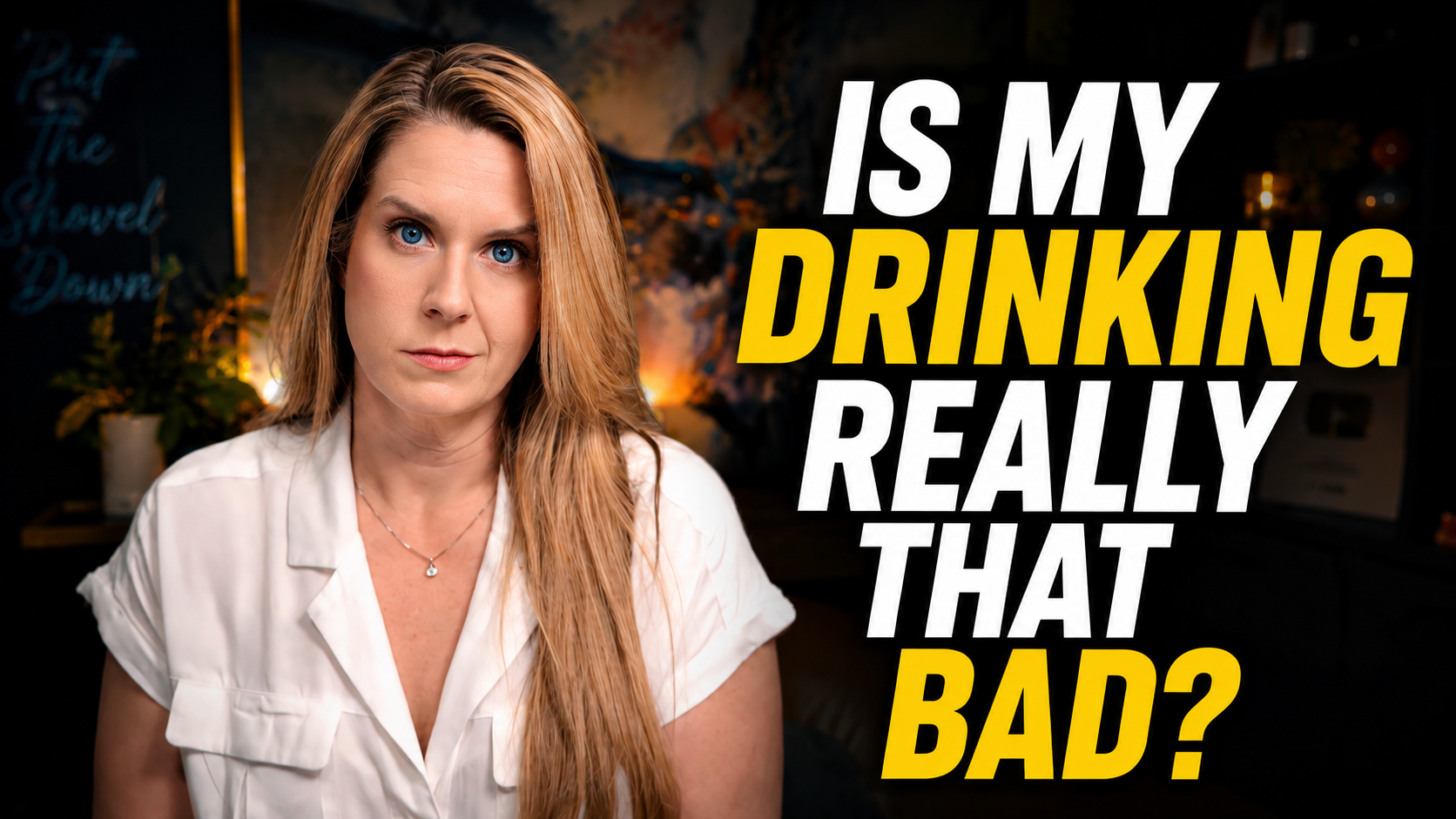
Watch the accompanying video for a closer look at these five questions. Then explore the next video in the series on the comparison trap and why comparing your drinking with someone else’s can keep you stuck.